
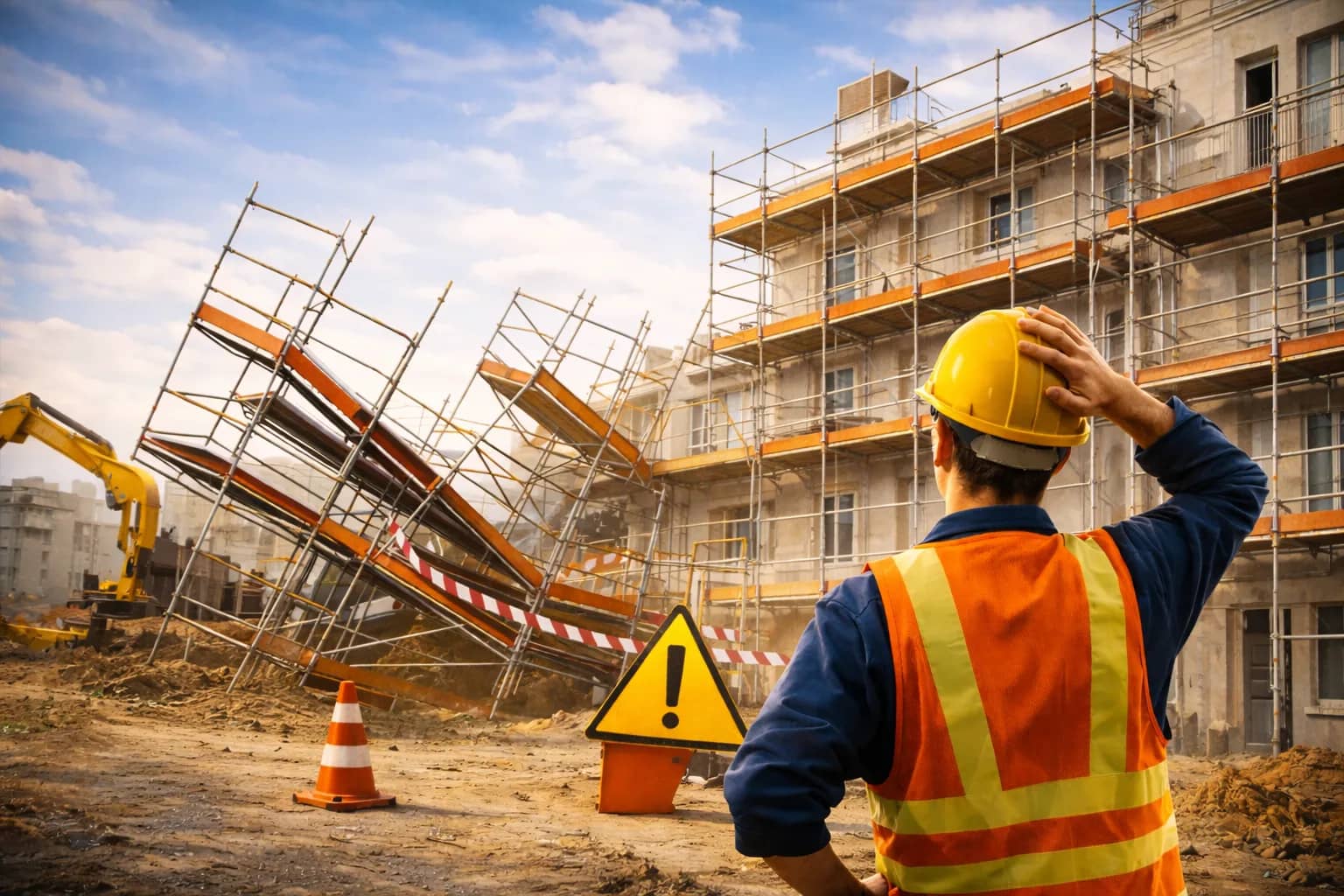
Common Mistakes When Renting Scaffolding
Why is it important to know typical mistakes?
Renting scaffolding seems like a simple matter – you call the supplier, provide the dimensions, and get the equipment. In practice, however, many companies and investors make mistakes that cost time, money, and sometimes threaten safety. Below we discuss the 10 most common problems and ways to avoid them.
Error 1: Inaccurate scope definition
Problem: You order scaffolding 'by eye', without exact dimensions of the facade. The result? You receive too few elements (you need to order again, wait for another delivery) or too many (you pay for equipment you don't use).
Solution: Before contacting the supplier, measure or estimate:
- Length and height of each wall to be covered
- Location of windows, balconies, obstacles
- Height from the ground to the highest working point
The more accurate the data, the more precise the quotation and lower risk of surprises.
Error 2: Choosing the cheapest offer without analyzing the scope
Problem: You only compare the price per m², not checking exactly what is included in the offer. A cheaper offer may not include transport, assembly, safety barriers, or ladders – these items added separately could make the 'cheap' offer more expensive.
Solution: Always compare offers in full scope: rental + transport + assembly + dismantling + safety elements. Ask for a 'turnkey' quote.
Error 3: Lack of rental time planning
Problem: You order scaffolding without a clear work schedule. The work drags on, and you pay for additional months of rental. Or conversely – you order it for too short a period and have to extend it in a hurry (often at a higher rate).
Solution: Plan a realistic schedule for facade work with a buffer for unforeseen delays (weather, material shortages). Agree on the conditions for lease extensions with the supplier before signing the contract.
Error 4: Ignoring site conditions
Problem: You do not check the ground on which the scaffolding will stand. Soft ground, slope, lack of a hardened surface – all these factors affect the stability of the structure.
Solution: Before ordering scaffolding, assess the site:
- Is the ground hardened and stable?
- Is the terrain level or does it require leveling?
- Are there obstacles (trees, installations, fences)?
Pass this information to the supplier – they will include it in the configuration and pricing.
Error 5: Saving on safety elements
Problem: You forego safety barriers, railings, or communication ladders to reduce rental costs. This not only violates health and safety regulations but poses a real threat to workers’ lives.
Solution: Safety elements are not optional – they are mandatory. Every scaffolding must have:
- Railings at every working level
- Curbs (curb boards) to prevent materials from falling
- Ladders or communication stairs
- Anchoring to the wall of the building
Do not negotiate down on safety elements. Never.
Error 6: No anchoring to the wall
Problem: The scaffolding stands 'freely', without anchoring to the building wall. In windy conditions or when loaded with materials, the structure may tilt or collapse.
Solution: Anchoring scaffolding to the wall is required by standards (EN 12811). The spacing of the anchors depends on the height and type of scaffolding. Ensure that the supplier has included anchors in the set and that the assembly team installs them correctly.
Error 7: Self-assembly without experience
Problem: You assemble the scaffolding alone, without training or experience. Assembly errors (incorrectly set frames, lack of bracing, improper anchoring) can lead to accidents.
Solution: If you do not have experience in scaffolding assembly, hire a professional team. The cost of assembly is a fraction of the potential losses resulting from an accident or the need for disassembly and reassembly.
Error 8: Lack of scaffolding inspection
Problem: After assembly, no one checks the scaffolding. Over weeks of use, elements may loosen, anchoring may weaken, and platforms may get damaged.
Solution: Scaffolding should be inspected:
- After assembly (technical acceptance)
- After any break longer than a week
- After strong winds or rainfall
- Regularly during use (at least once a week)
Error 9: Lack of insurance
Problem: You rent scaffolding without checking the insurance conditions. Who is responsible for damage to the equipment? What if an element is stolen from the construction site?
Solution: Before signing the rental agreement, check:
- Who is responsible for damage to the equipment
- Does your construction insurance cover rented equipment
- What are the conditions for returning damaged elements
Error 10: Lack of documentation and acceptance
Problem: You do not create a delivery acceptance protocol or when returning. In case of disputes, you have no proof of the equipment’s condition.
Solution: Always prepare a protocol:
- Upon delivery – check the quantity and condition of elements
- Upon return – document the condition of the equipment
Photos and a signed protocol are your security in case of complaints.
Summary
Most mistakes in scaffolding rental arise from haste, lack of planning, or the desire to save on the wrong elements. Key rules:
- Clearly define the scope before ordering
- Compare offers in full scope (not just price per m²)
- Never save on safety
- Plan rental time with a buffer
- Use professional assembly
Want to avoid mistakes and immediately choose the optimal set? Use our calculator – in 2 minutes you will receive a precise list of elements and an approximate quote.
👉 Launch the calculator and order scaffolding without mistakes.
Need a quote?
Use our calculator – in 2 minutes you'll get an estimated price, element list and a visual configuration drawing.
👉 Launch calculator