
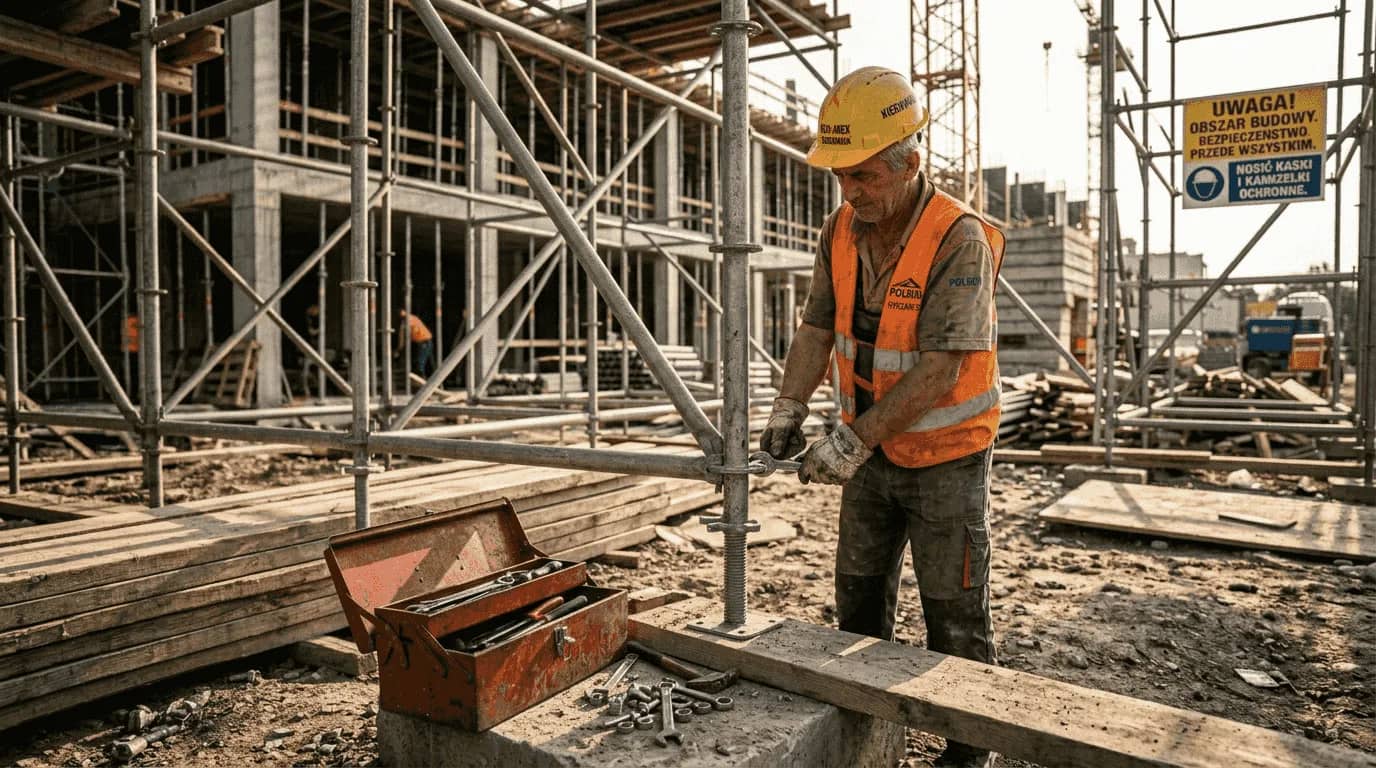
Typical Scaffolding Accessories: Safety Key
Construction contractors know well that even the most advanced scaffolding will not ensure safety without properly selected accessories. The problem of improper component selection affects most construction sites, leading to structural instability and hazards for workers. Proper accessories are the foundation of any safe construction project. This article presents a comprehensive overview of typical scaffolding accessories, criteria for their selection, and practical tips that will help avoid costly mistakes and hazards on the job site.
Table of contents
- How to choose typical scaffolding accessories: criteria and principles
- Typical scaffolding accessories: description and applications
- Comparison of accessories and tips for selecting the best solutions
- Common mistakes and how to avoid them when selecting and using scaffolding accessories
- Learn more about scaffolding and accessories at ideatrade
- Frequently asked questions
Key conclusions
| Point | Details |
|---|---|
| Proper selection of accessories | Ensures stability of the structure and safety of workers at heights |
| Inappropriate components | Account for 30-40% of accidents related to scaffolding use |
| Regular inspection | Increases the durability of the system and minimizes the risk of failure |
| Fit to type | Affects work efficiency and compliance with applicable regulations |
How to choose typical scaffolding accessories: criteria and principles
Selecting scaffolding accessories requires understanding the key principles of compatibility and safety. Correct selection of accessories determines the stability of the entire structure and the protection of workers. Each scaffolding system has specific requirements for components that must meet the standards PN-EN 12810 and 12811.
Compatibility with the scaffolding system is the primary criterion for selection. Accessories must fit specific types of structures, whether modular, frame, or tube-and-coupler. Using elements from different systems leads to weakened connections and increases the risk of collapse. Manufacturers clearly specify which components work together.
Load capacity and safety certifications are other key aspects. Each element must be marked with the maximum working load and possess appropriate certifications. Only choose certified products with technical documentation. More information about standards can be found in construction guides.
Proper anchoring and stabilization on uneven ground requires the use of specialized accessories. Adjustable legs allow for precise leveling of the structure, while pads distribute the load over a larger surface area of the ground. Anchors secure the scaffolding against shifting and overturning, especially when working on the facades of high buildings.
Professional tip: Always choose certified accessories compatible with the scaffolding system and strictly follow the manufacturer's instructions. Document every purchase and keep technical data sheets for all components.
Basic categories of accessories include:
- Anchors and connectors providing horizontal stability
- Tube and modular connectors linking construction elements
- Wooden and steel pads distributing the load
- Rails and barriers protecting against falls from heights
- Adjustable legs enabling leveling
Typical scaffolding accessories: description and applications
Adjustable legs are the foundation of any stable scaffolding structure. They allow for precise leveling even on very uneven terrain. The adjustment range is typically 30-60 cm, which compensates for significant height differences. Made of galvanized steel, they withstand loads up to 20 tons per element.
Wooden and steel pads play a crucial role in distributing the load onto the ground. Wooden pads with dimensions of at least 20x20 cm and a thickness of 4 cm perform well on stable surfaces. Steel base plates provide better durability on soft ground and in damp conditions. Their use reduces the risk of settlement of the structure.
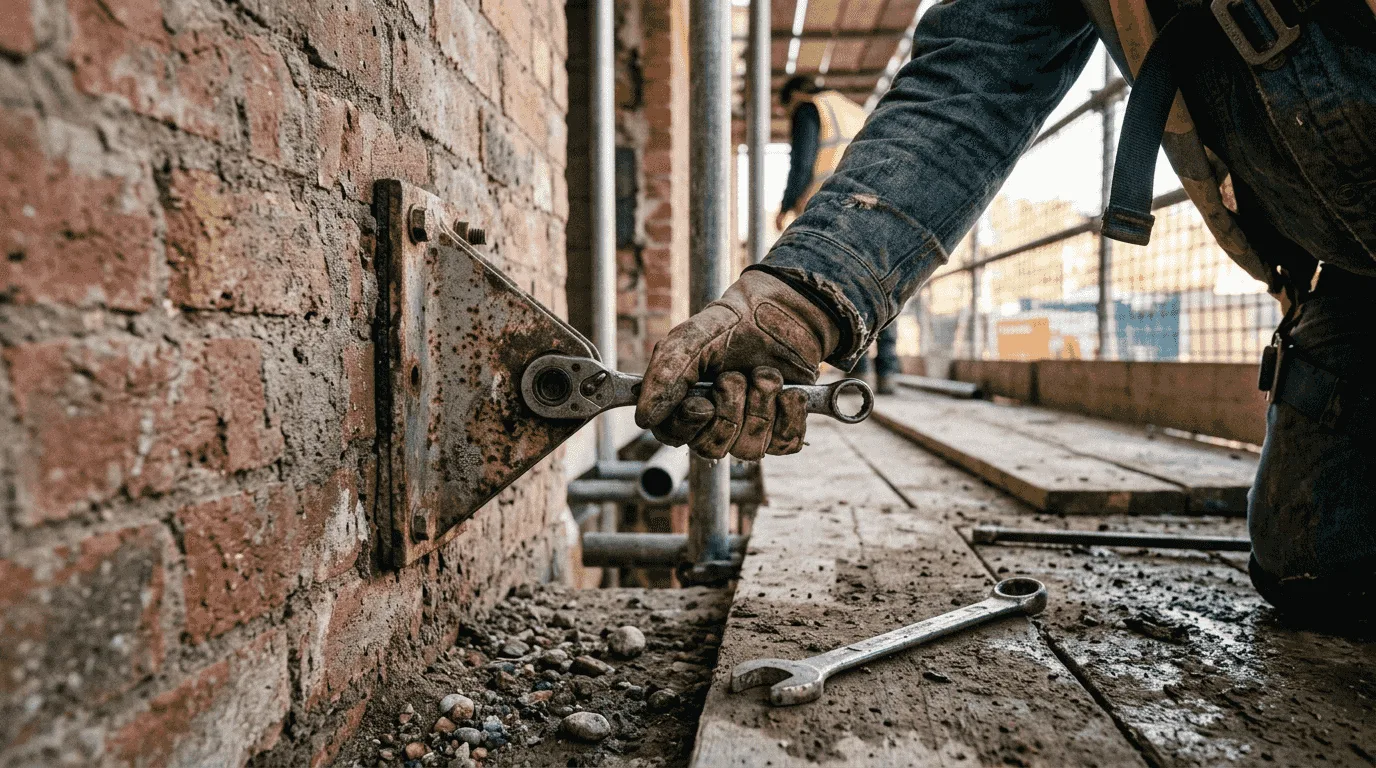
Anchors and connectors secure the scaffolding against shifting and overturning. Different types of scaffolding require specific anchoring solutions to maintain integrity. Expanding anchors are installed every 4 meters vertically and every 6 meters horizontally. Connectors must be tightened to the torque specified by the manufacturer.
Protective rails and barriers are the primary safeguard against falls from height. The top rail is installed at a height of 100-110 cm, the middle one at 50-60 cm above the platform level. Baseboards with a height of at least 15 cm prevent tools and materials from sliding off. All elements must withstand a minimum horizontal load of 300 N.
Work and auxiliary platforms facilitate access and work at different levels. A minimum width of 60 cm ensures comfortable movement, while the anti-slip surface increases safety. Steel platforms with a grate withstand loads of up to 200 kg/m². Access ladders and staircases provide safe entry to height.
Tube and modular connectors link construction elements into a stable whole. Rotatable connectors allow for creating joints at any angle, while rigid ones provide maximum strength for perpendicular connections. Compatibility with the system and appropriate material quality are the foundation of durability. Check the offer of rental and sale of scaffolding tailored to your needs.
Comparison of accessories and tips for selecting the best solutions
Comparing key accessories helps in making informed choices for optimal solutions for specific projects. The table below presents the most important parameters and applications:
| Accessories | Compatibility | Load Capacity | Advantages | Limitations | | – | – | – | – | | Adjustable feet | Universal for most systems | Up to 20 tons | Precise leveling, rapid assembly | Require a firm foundation | | Steel pads | All types of scaffolding | Load distribution 150-300 kg/cm² | Moisture resistance, reusable | Higher cost than wood | | Anchor bolts | Modular and frame systems | Pull-out force 12-25 kN | Maximum safety, easy inspection | Require suitable wall substrate | | Rotation connectors | Tube scaffolding | Torque 40-50 Nm | Flexibility of configuration | Require regular tightening | | Aluminium handrails | Lightweight systems | Horizontal load 300 N | Low weight, corrosion resistance | Higher price than steel |
Compatibility with the scaffolding system is the first parameter to verify. Mixing elements from different manufacturers leads to assembly issues and weakening of the structure. Check the manufacturer's markings and technical documentation before purchase.
Load capacity defines the maximum safe load of each element. Using certified accessories reduces the risk of accidents by up to 40%. Never exceed the parameters specified by the manufacturer. Consider a minimum safety factor of 1.5 when planning loads.
Corrosion resistance affects long-term durability and safety. Hot-dip galvanized steel provides protection for 15-20 years, while paint coatings require renewal every 3-5 years. In chemically aggressive environments, choose stainless steel or aluminium.
Ease of assembly translates into time savings and error reduction. Quick-assembly systems with self-locking connectors minimize the risk of incorrect connections. Training employees on specific system operation is an investment in safety.
Professional tip: Choose accessories tailored to the specifics of the project, considering the height of the structure, soil type, and weather conditions. Invest in the quality of certified products instead of cutting costs on safety. Familiarize yourself with the most common mistakes in renting, to avoid them.
Regular inspections and replacement of worn elements are fundamental to maintaining safety. Check the condition of accessories before each assembly and weekly during use. Replace damaged or corroded components immediately, do not repair them using makeshift methods.
The most common mistakes and how to avoid them when selecting and using scaffolding accessories
Using incompatible accessories is the most serious mistake on construction sites. Combining elements from different systems weakens connections and leads to instability of the structure. Incorrect assembly and unsuitable accessories account for about 30% of failures. Always verify the compatibility of components with the system's technical documentation.
Lack of adjustments and safety devices is another common problem. Adjustable feet left un-tightened change height under load. Anchors installed at incorrect intervals do not provide the required stability. Handrails without baseboards do not prevent objects from sliding off.
Overloading results from ignorance or neglect of technical parameters. Each platform has a specified load capacity, exceeding which poses a risk of disaster. Storing construction materials on scaffolding requires considering their weight in calculations. Never assume that the structure can withstand more than what the manufacturer states.
Neglecting the manufacturer's instructions and health and safety regulations leads to serious legal consequences and hazards. Each scaffolding system has detailed assembly guidelines that must be strictly followed. Deviations from procedures eliminate the manufacturer's warranty and the insurer's liability in case of an accident.
Maintenance issues and neglected inspections shorten the lifespan of accessories and increase the risk of failure. Corrosion weakens the load capacity of steel components, often invisibly to the naked eye. Regular cleaning, maintenance, and storing in dry conditions prolong the durability of components.
The lack of training for workers responsible for assembly is an investment in future problems. Even the best accessories will not ensure safety if poorly installed. Certified training for operating specific scaffolding systems is a minimum requirement for all installers. Check out frequent rental mistakes to avoid costly errors.
A checklist to prevent failures and accidents:
- Verify certificates and compliance of all accessories before assembly
- Conduct a visual inspection of components before each use
- Document inspections and replacements in the construction log
- Train employees on assembly and disassembly procedures
- Store accessories in dry, secured warehouses
- Replace damaged components immediately, do not repair them
- Follow anchoring intervals specified in the documentation
- Do not exceed the allowable loads of working platforms
Learn more about scaffolding and accessories at IdeaTrade
The IdeaTrade platform offers comprehensive solutions for contractors and investors seeking safe and certified scaffolding systems. A wide selection of accessories tailored to different types of structures ensures compatibility and maximum safety on the construction site. Professional technical support aids in selecting optimal components for each project.
On the site, you will find practical guides on selecting and using scaffolding and accessories. The offer of modular scaffolding includes complete sets with certified safety components. Take advantage of rental and sales opportunities for scaffolding that enhance the efficiency and safety of your construction projects.
Frequently asked questions
What accessories are essential for scaffolding?
Adjustable legs, pads, anchors, connectors, railings, and working platforms form the foundation of safe scaffolding. The selection depends on the type of construction and working conditions on the construction site. Each element must be certified and compatible with the system.
How often should scaffolding accessories be inspected?
Inspections should take place before every use and according to the maintenance plan, at least once a week. Check the technical condition, presence of corrosion, and mechanical damage. Document all inspections in the construction log to ensure compliance with regulations.
Do the accessories need to be certified?
Yes, using accessories with EN, ISO, or PN-EN certifications ensures adequate quality and safety. Lack of certifications can lead to serious risks for workers and legal problems with labor inspections. Verify the documentation before purchase.
How to adapt accessories to different types of scaffolding?
Each type of scaffolding (modular, framed, tube-and-coupler) requires dedicated accessories compatible with the manufacturer's system. Only use components specified in the technical instructions and documentation. Check the compatibility of accessories with your scaffolding system.
Recommendation
Need a quote?
Use our calculator – in 2 minutes you'll get an estimated price, element list and a visual configuration drawing.
👉 Launch calculator