
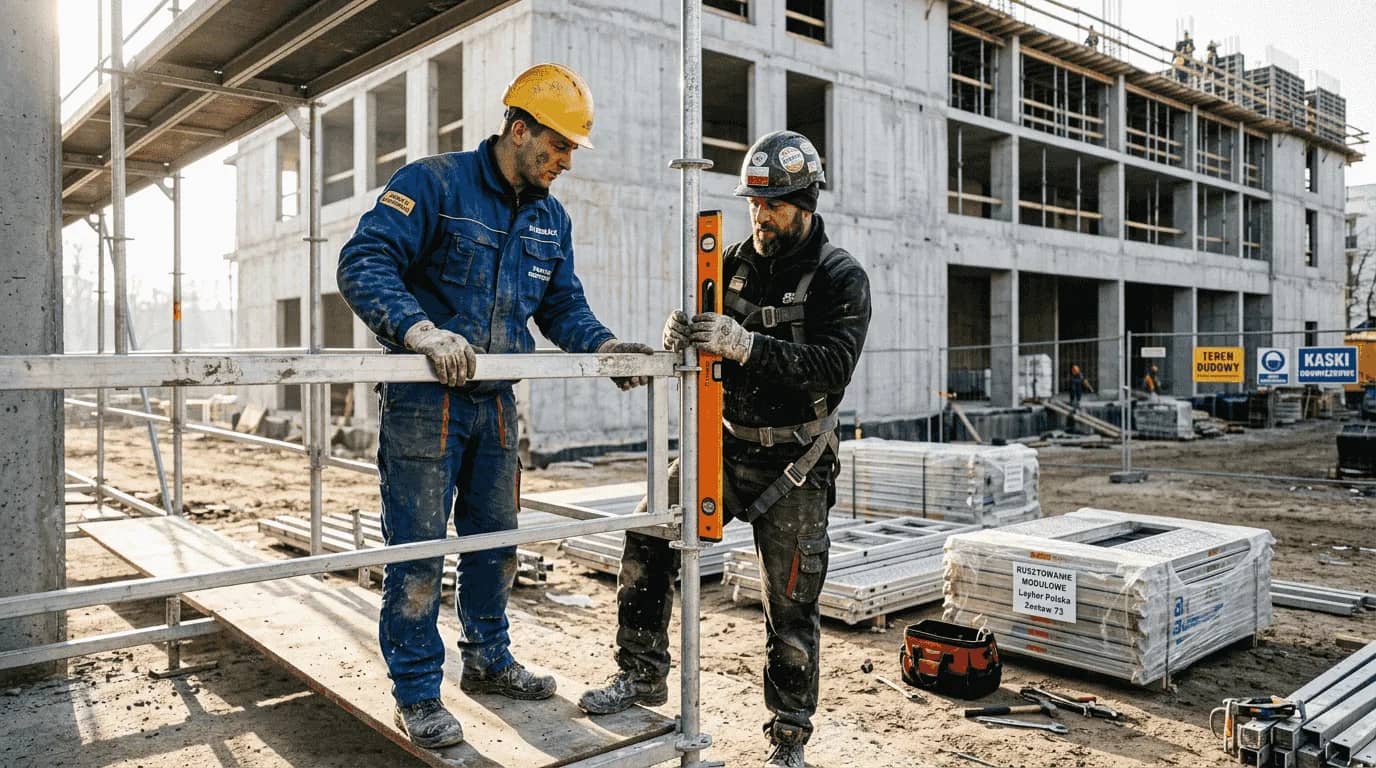
Development of Scaffolding Technology in 2026: Innovations and Safety
Traditional perceptions of scaffolding as heavy, time-consuming structures are a thing of the past. Modern construction sites require solutions that combine safety with operational efficiency. Lightweight composite materials and aluminium alloys are revolutionizing the way contractors approach work at heights. Digital technologies such as BIM and IoT introduce precise monitoring of structural stability in real-time. Innovative assembly systems reduce the risk of errors and cut installation time by half. For investors and construction contractors in Poland, these changes mean not only higher productivity but, most importantly, a significant improvement in safety on the construction site.
Table of Contents
- Material and structure of modern scaffolding
- Innovative assembly systems and their impact on efficiency
- Digital integration: BIM and IoT in scaffolding monitoring
- Advanced safety measures and scaffolding safety standards
- Scaffolding on lifts: challenges and practical solutions
- Discover modern scaffolding systems from ideatrade
Key conclusions
| Point | Details |
|---|---|
| Reduction of construction weight | Modern aluminium alloys and high-strength steel reduce the weight of scaffolding by 30-40% while maintaining full load capacity. |
| Faster assembly | Quick-connect systems and prefabricated elements shorten installation time by up to half compared to traditional methods. |
| Digital monitoring | The integration of BIM and IoT allows for load simulations and real-time monitoring of stability. |
| Higher protection standards | Anti-slip platforms, automatic locks, and safety zones comply with standards PN-EN 12811-1 and PN-EN 12812. |
| Specialized applications | Scaffolding on lifts requires precise assembly and regular checks of the stability of fastenings. |
Materials and structure of modern scaffolding
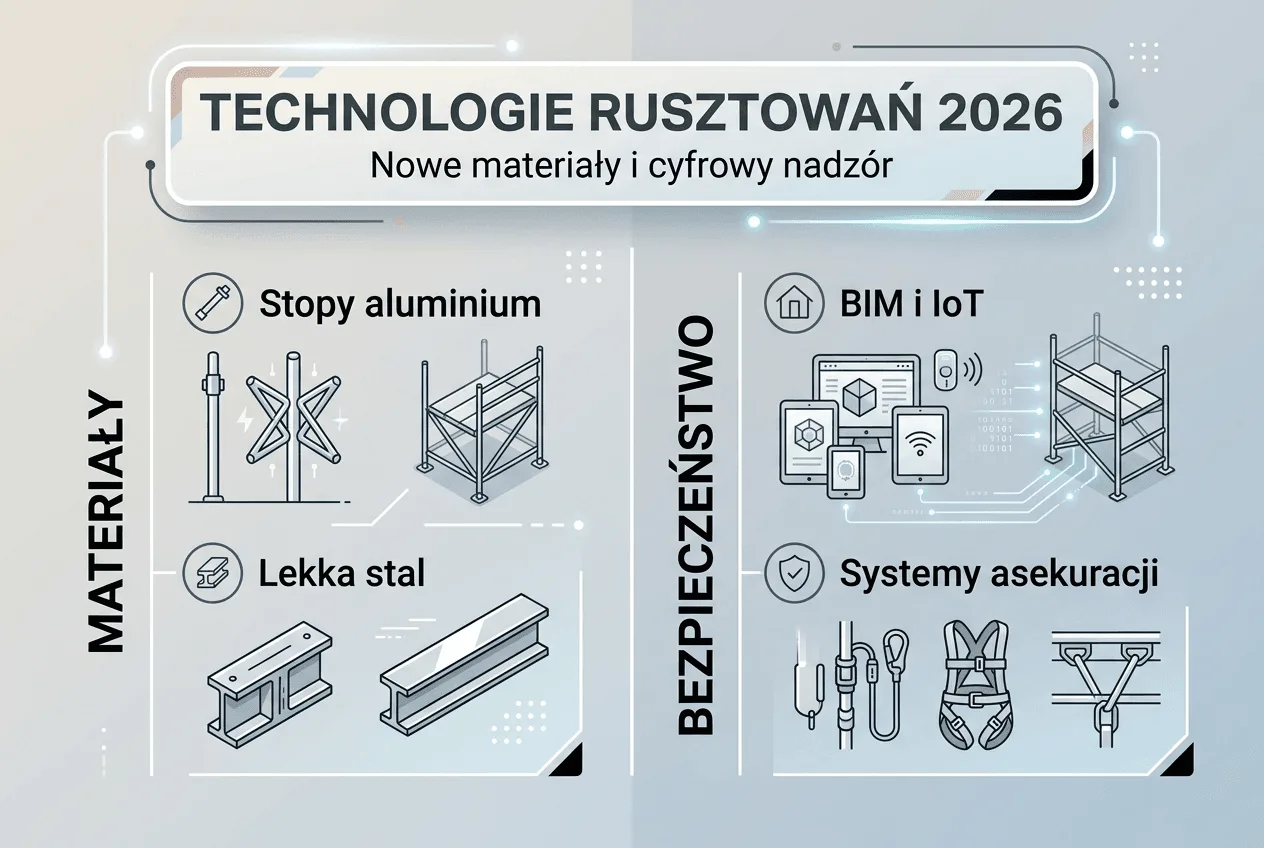
The choice of construction material directly affects safety, transport efficiency, and speed of assembly. Modern scaffolding utilizes lightweight materials such as aluminium alloys and high-strength steel, reducing weight by 30-40% while maintaining load capacity. This significant weight reduction translates to less load on the building's foundations and easier transport to the construction site.
aluminium alloys exhibit exceptional corrosion resistance, extending the lifespan of structures even in harsh weather conditions. High-strength steel offers a better strength-to-weight ratio than traditional grades. Both materials enable the construction of slimmer elements without compromising safety.
| Material | Weight (kg/m²) | Corrosion resistance | Load capacity (kN/m²) |
|---|---|---|---|
| Traditional steel | 18-22 | Average | 3.0-4.5 |
| aluminium alloys | 10-13 | High | 2.5-3.5 |
| High-strength steel | 12-15 | Very high | 4.0-6.0 |
When selecting material for a specific project, contractors should consider the height of the structure, duration of work, and environmental conditions. For short-term façade projects, lightweight aluminium systems are suitable. Projects that require high load capacity and long-term use will benefit from high-strength steel. It's advisable to consult with building component manufacturers who have quality certifications.
Professional tip: Before selecting scaffolding material, conduct a total cost of ownership analysis, considering not only the purchase price but also transport, assembly, and potential repair costs. Lighter structures lead to lower logistics costs and require smaller assembly crews.
Additional information on selecting the appropriate solutions can be found in construction guides developed by industry experts.
Innovative assembly systems and their impact on efficiency
Traditional scaffolding assembly required time-consuming operations to connect components using wedges and screws. Innovative assembly systems utilize quick connectors, snap locks, and prefabricated elements that reduce assembly time and minimize errors. Snap mechanisms allow for connecting two components with one motion without the need for additional tools.
Prefabricated modules are delivered to the construction site as complete sections ready for installation. This eliminates the need to assemble individual components on-site. This system significantly reduces the risk of improper assembly, as the elements can only be connected in the intended manner. Contractors gain confidence that the structure meets design requirements.
The benefits of quick assembly go beyond time savings:
- Reduction of labor costs due to shortened working hours of assembly crews
- Lower risk of accidents related to prolonged work at heights
- Greater flexibility in adjusting the construction schedule
- Ability to respond more quickly to changing weather conditions
- Lower rental costs for equipment due to a shorter usage period
Modern construction scaffolding equipped with quick assembly systems does not require heavy lifting equipment. Lightweight components can be handled manually, lowering operational costs and increasing safety. Fewer mechanical operations also mean lower energy consumption and a smaller carbon footprint for the project.
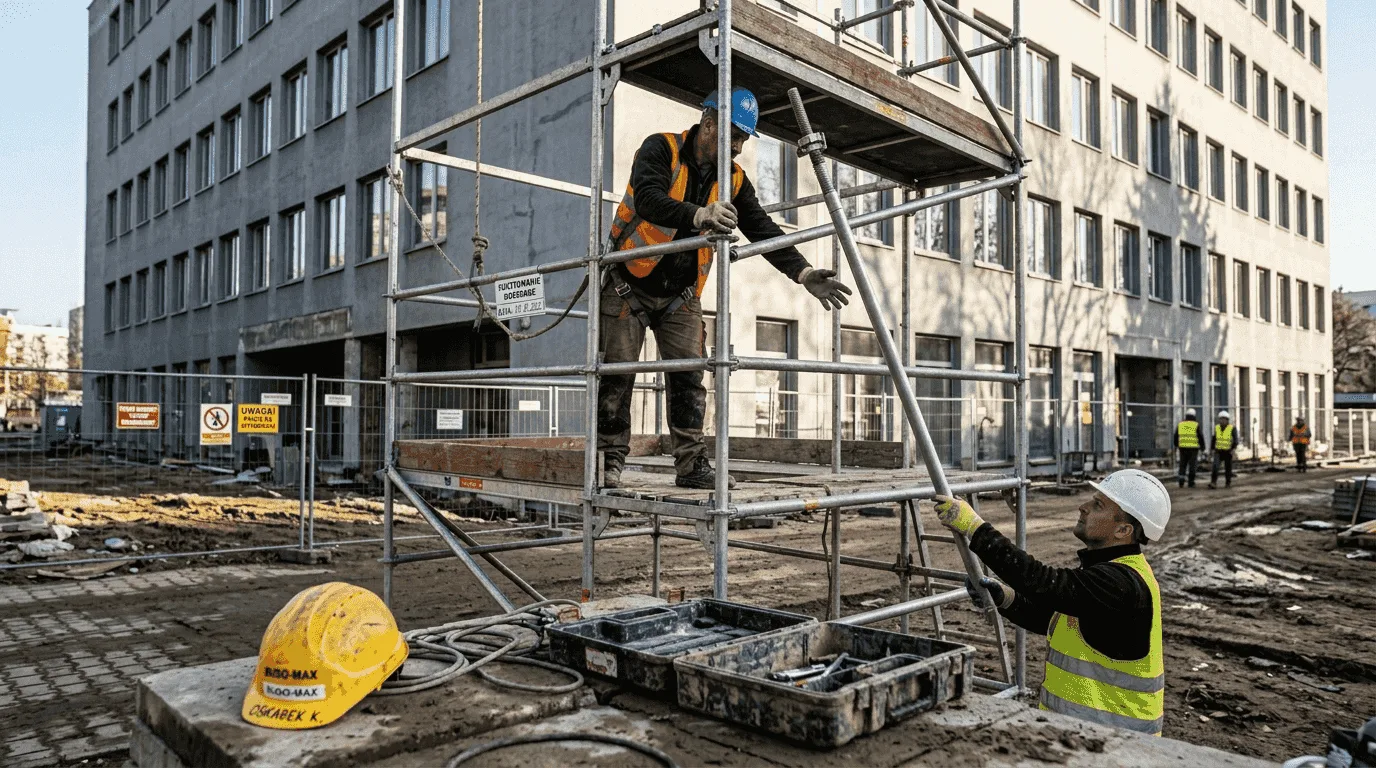
Professional tip: When planning the assembly of scaffolding, organize material delivery in a sequence that corresponds to the order of installation. This approach minimizes the need to move elements around the construction site and accelerates the entire process by an additional 15-20%.
Avoiding the most common mistakes when renting scaffolding requires familiarity with the specifics of various assembly systems and their technical limitations.
Digital integration: BIM and IoT in scaffolding monitoring
Digital technologies fundamentally change the way temporary structures are designed and supervised. Integration with BIM and IoT enables BIM design for load simulations and utilizes sensors to monitor stability in real-time. Building information modeling allows for the creation of a digital twin of the scaffolding even before the assembly begins.
In the BIM environment, engineers conduct advanced strength analyses, testing various load scenarios. The system automatically identifies potential critical points and suggests optimal construction solutions. Simulations take into account wind loads, snow, and dynamic forces arising during work.
IoT sensors installed at key points of the structure provide data on:
- Current load of individual elements
- Tilt and deformations of the structure
- Vibrations caused by wind or machine operation
- Temperature and humidity affecting the properties of materials
Data from sensors goes to a central monitoring system that immediately alerts when safe parameters are exceeded. Contractors can react before a dangerous situation occurs. The system stores measurement history, allowing analysis of trends and predicting potential problems.
The implementation of IoT monitoring systems in high-rise scaffolding reduces the risk of structural failures by 65% and allows for optimization of technical inspection schedules.
Steps for implementing digital solutions on the construction site:
- Creating a BIM model of scaffolding integrated with the building project
- Conducting load simulations and identifying critical points
- Installing IoT sensors at designated locations during assembly
- Configuring the monitoring system and determining alarm thresholds
- Training teams in data interpretation and response procedures
- Regular analysis of collected data and optimization of the structure
Modular scaffolding particularly works well with digital systems due to the standardization of components. Repetitive modules facilitate the creation of precise models and predicting structural behavior. Practical tips for selecting scaffolding for facades help in choosing the optimal system for a specific project.
Advanced safety features and standards for scaffolding
Worker safety is the highest priority on every construction site. Advanced safety features include anti-slip platforms, guardrails, automatic locks, and safety zones that meet standards PN-EN 12811-1 and PN-EN 12812. These standards define minimum requirements for temporary structures used during construction work.
Anti-slip platforms made of perforated metal or wood with grooved surfaces prevent slipping even in rain or icy conditions. Guardrails must withstand a minimum horizontal load of 300 N applied at any point. Automatic locks prevent accidental disconnection of components during use.
Safety zones equipped with anchoring points allow workers to safely attach safety harnesses. This system acts as a last line of defense in case of a fall. The standard PN-EN 12811-1 defines requirements for working scaffolding, while PN-EN 12812 relates to supporting scaffolding.
| Protective element | Function | Compliance with standard | Minimum requirements |
|---|---|---|---|
| Anti-slip platform | Prevents slipping | PN-EN 12811-1 | Friction coefficient >0.5 |
| Guardrail | Prevents falls | PN-EN 12811-1 | Strength 300 N |
| Automatic lock | Prevents disconnection | PN-EN 12811-1 | Load test 2x standard |
| Anchoring point | Secures harnesses | PN-EN 795 | Strength 12 kN |
Regular technical inspections are a key element in maintaining safety. Warsaw scaffolding is subject to inspection before first use, then at least once a week and after any event that may affect the stability of the structure. Inspections include checking the technical condition of components, correctness of assembly, and completeness of safety measures.
Professional tip: Introduce a color-coded marking system for scaffolding components based on the date of the last inspection. A green label indicates a current inspection, yellow denotes an impending inspection date, and red signifies the need for immediate removal of the component from use.
Understanding safety rules for working on scaffolding requires knowledge not only of regulations but also of practical aspects of their application in daily work.
Scaffolding on extending arms: challenges and practical solutions
Work on high floors requires specialized solutions to provide access to facades without the need to build traditional scaffolding from ground level. Scaffolding on extending arms requires stable mountings, appropriate load capacity, and precise adjustments, as installation errors can lead to instability of the entire structure. This system uses brackets attached to the building wall or balcony on which the working platform rests.
The stability of scaffolding on extending arms depends on three key factors. Mountings to the building structure must carry both vertical and horizontal loads. The load capacity of the brackets should consider the weight of the platform, building materials, and workers with a safety margin of at least 50%. Level adjustment ensures even load distribution and a stable working surface.
Common installation mistakes and their consequences:
- Insufficient number of mounting points leads to overload of individual brackets
- Incorrect selection of anchors for the type of wall causes them to pull out under load
- Lack of platform leveling generates uneven loads and risk of tipping
- Exceeding permissible span between mountings increases deflection of the structure
- Neglecting to check the technical condition of anchors can lead to their damage
Installation and safety inspection guide:
- Conduct a thorough assessment of the wall's load-bearing capacity at planned mounting locations
- Select anchors and brackets according to the static calculations of the project
- Install attachments within the maximum spacing specified by the manufacturer
- Level the working platform using a laser level for accuracy
- Install guardrails and anchoring points before starting work
- Conduct a test load of the platform before allowing workers to use it
- Perform daily visual inspections of fasteners and structural elements.
It is crucial for contractors and investors to understand that savings at the design and installation stages of scaffolding can lead to significantly higher repair and downtime costs. Professional installation by trained teams ensures safety and efficiency. The specifics of scaffolding require particular attention during renovation work in historical buildings.
An alternative for some applications may be mobile scaffolding, which offers mobility while maintaining high safety standards. The choice of the right system depends on the specifics of the project, available space, and time requirements.
Discover modern scaffolding systems from IdeaTrade
The choice of the right scaffolding system directly impacts the safety and efficiency of your construction project. IdeaTrade offers comprehensive solutions that combine modern technologies with years of experience in the industry. Our offer includes advanced modular scaffolding equipped with quick assembly systems and specialized Warsaw scaffolding tailored for work at heights.
Every system in our offer meets the highest safety standards PN-EN 12811-1 and has current quality certificates. We provide professional technical consulting, transport to the construction site, and assembly by trained teams. Whether you need a short-term solution or long-term support for a large project, we will tailor our offer to your needs. Take advantage of our construction guides to learn about the technical details of different systems and make the optimal choice for your investment.
Frequently Asked Questions
What are the benefits of using lightweight materials in scaffolding?
Lightweight materials reduce the weight of the scaffolding by 30-40%, making assembly and transport easier and increasing resistance to corrosion. The reduction in weight translates to a lower risk of accidents during the handling of elements and improves the ergonomics of work for assembly teams. A lower self-weight of the structure also means less load on the building's foundations and the possibility of using simpler anchoring solutions. aluminium feet and high-strength steel maintain full load-bearing capacity with significantly reduced weight.
How do modern assembly systems impact safety on construction sites?
Quick-release systems and prefabricated elements minimize assembly errors, shorten installation time, and reduce accident risks. Snap mechanisms allow for the connection of elements without the use of tools, eliminating the dangers associated with using wrenches at height. Prefabrication limits the possibility of incorrect assembly since elements connect only in the intended manner. A shorter working time at height directly reduces workers' exposure to hazards.
Is BIM and IoT technology already commonly used in scaffolding?
BIM and IoT technologies are gaining popularity, especially in projects requiring precise monitoring and load analysis. They provide a higher level of safety and optimize scaffolding maintenance by early detection of potential problems. However, implementation requires investments in measuring equipment, software, and staff training. The largest construction companies already routinely use these solutions in high-rise and infrastructure projects, and this trend is gradually encompassing smaller enterprises.
What safety standards must modern scaffolding meet?
Modern scaffolding should meet the PN-EN 12811-1 and PN-EN 12812 standards concerning structural safety and safeguards. These standards encompass detailed requirements regarding the load-bearing capacity of platforms, heights, and the safety of guardrails and safety systems. PN-EN 12811-1 defines the parameters for working scaffolds used during construction work, while PN-EN 12812 regulates the requirements for supporting scaffolding. Additionally, anchoring points must comply with the PN-EN 795 standard, guaranteeing the safety of fall protection systems.
Recommendation
Need a quote?
Use our calculator – in 2 minutes you'll get an estimated price, element list and a visual configuration drawing.
👉 Launch calculator