
Scaffolding Rental 2026: Cost Savings and Safety in Construction
Many construction contractors still consider the purchase of formwork to be the only sensible solution for any project. However, renting formwork often proves to be more cost-effective, flexible, and safe, especially for short- and medium-term investments. The decision between purchase and rental requires consideration of costs, work schedules, and project specifics. In this guide, we will discuss how renting formwork affects the construction budget, which systems to choose for maximum efficiency, and how to plan the rental to avoid costly mistakes and ensure safety on the construction site.
Table of Contents
-
How the proper selection of formwork system improves efficiency and safety
-
Planning and organizing formwork rental for optimal project implementation
-
Benefit from professional formwork and scaffolding rental at ideatrade
Key information on formwork rental
| Point | Details |
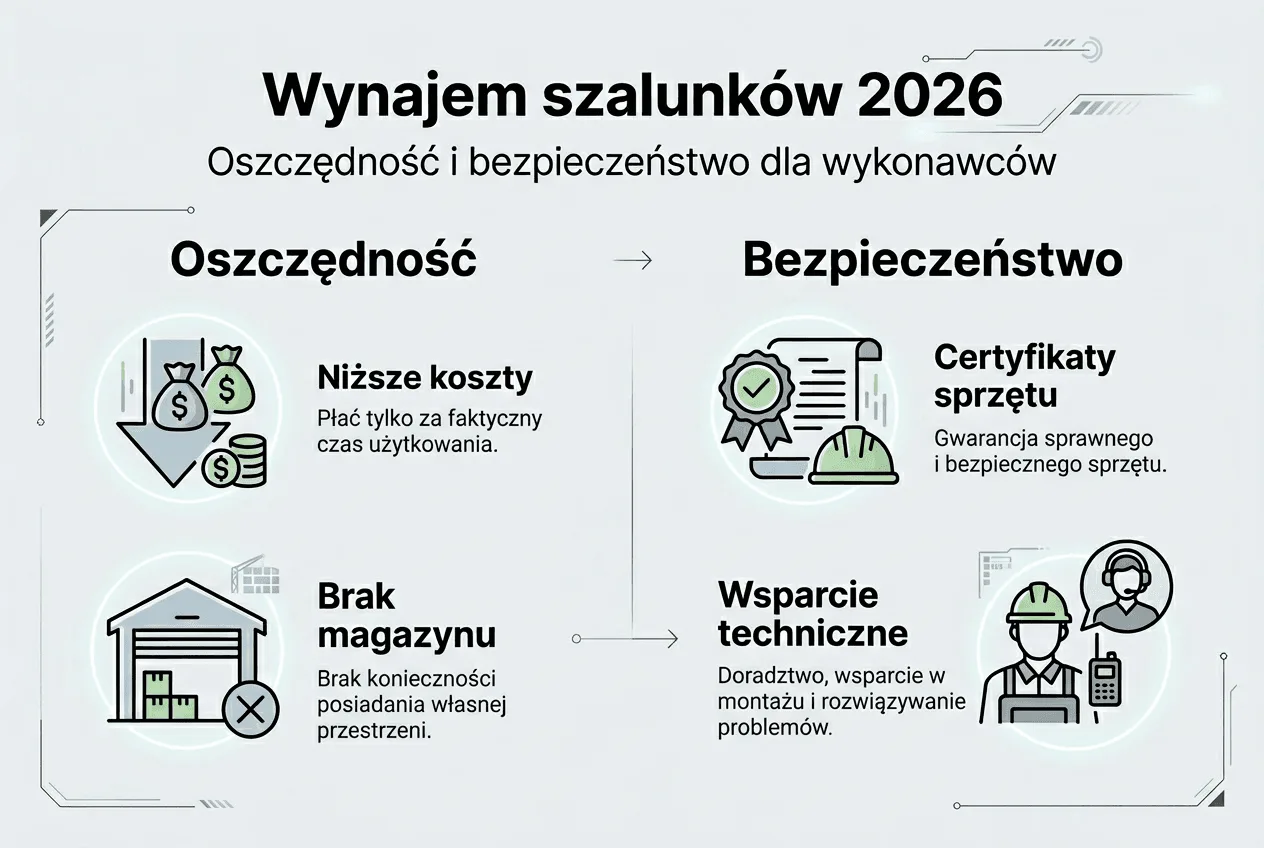
| Cost savings | Rental eliminates capital expenditures, maintenance, and storage costs, reducing project costs by up to 30%. |
| Project flexibility | The ability to adapt the formwork system to changing construction needs without long-term commitments. |
| Safety and certifications | Professional suppliers provide regular technical inspections and current compliance certificates with EN standards. |
| Technical support | Comprehensive advice, transport, assembly, and service on the construction site as part of the rental service. |
How renting formwork affects construction project costs
The choice between purchasing and renting formwork directly impacts the investment budget and contractor cash flow. Renting eliminates the need to spend large sums on equipment that, after project completion, requires costly storage and maintenance. For many construction companies, this cash flow difference determines the profitability of the venture.
Rental prices for formwork vary depending on the type of system and duration of rental. Frame formworks are the cheapest option, ideal for simple residential structures. Modular systems offer greater versatility and speed of assembly, which translates into a higher daily rate. Climbing and tunnel formworks, used in high-rise buildings and infrastructure construction, generate the highest daily costs, but their time efficiency often compensates for the higher rates.
Rental periods of 2 to 4 weeks can yield a discount of 10-15%, while rentals exceeding a month offer discounts ranging from 25-30%.Careful planning of the work schedule allows for maximum utilization of these discounts. The key is to synchronize formwork deliveries with the actual needs of the construction site, avoiding both equipment downtime and delays in execution.
Professional tip: Negotiate rental terms before signing the contract, considering the possibility of extending the rental period at preferential rates. Many suppliers offer better conditions for regular customers or when renting larger quantities of equipment. It is also worth asking about packages that include transport and assembly, which are often more cost-effective than ordering services separately.
Practical planning tips for rental include:
-
Accurate estimation of formwork usage time based on the work schedule
-
Booking equipment in advance, especially during the construction season
-
Including time for assembly, disassembly, and transport in the rental period calculation
-
Monitoring work progress and flexibly adjusting return dates
Comparison of costs for different formwork systems:
| Formwork system | Daily cost (approximately) | Best use |
| Frame | 15-25 PLN/m² | Simple residential structures, foundations |
| Modular system | 25-40 PLN/m² | Multi-storey buildings, diverse projects |
| Climbing | 50-80 PLN/m² | High buildings, towers, chimneys |
| Tunnel | 60-100 PLN/m² | Infrastructure construction, tunnels, bridges |
Cost optimization also requires consideration of indirect expenses. Rental of ceiling formwork eliminates the need to hire additional personnel for maintenance and storage of equipment. Professional suppliers provide fully operational equipment, minimizing the risk of downtime and repair costs. A detailed analysis of formwork rental costs should be conducted at the bidding stage, taking into account all component elements.
How the proper selection of formwork system improves efficiency and safety
Choosing the right formwork system is crucial for effective project cost management. Each type of formwork has specific technical characteristics that determine its suitability for particular applications. Incorrect selection leads to unnecessary expenses, delays, and safety hazards.
Frame formworks are a traditional solution consisting of wooden or steel frames filled with plywood. Their simple construction translates into low rental costs and ease of assembly, making them an ideal choice for standard walls and foundations. However, their limited versatility means they are unsuitable for complicated geometries or high loads.
Modular systems offer significant flexibility through standardized elements that can be connected in various configurations. The ability for quick assembly and disassembly shortens execution time, which, with proper planning, compensates for the higher daily rates. These systems are effective in multi-storey buildings, where construction repeatability allows for maximizing their potential.
Climbing formwork is a specialized solution for tall vertical structures. The system moves along with the progress of work, eliminating the need for multiple assembly and disassembly. High time efficiency and work safety at great heights justify the premium price. Tunnel formwork is used in infrastructure construction, where the simultaneous forming of walls and ceilings significantly speeds up execution.
Professional tip: Before choosing a system, consult with the supplier by presenting the project's technical documentation. Professional companies offer free advisory services and help in selecting the optimal solution, considering not only rental costs but also the impact on the schedule and work safety.
A key aspect is verifying the technical condition of the rented formwork and the safety certificates they possess.Compliance certificates with EN standards confirm that the system meets the requirements for load-bearing capacity, stability, and safety of use. Regular technical inspections ensure that the equipment remains fully operational throughout the rental period.
Comparison of key features of formwork systems:
| Feature | Framework | Systematic | Climbing | Tunnel |
| Versatility | Low | High | Medium | Low |
| Installation speed | Medium | High | High | Very high |
| Required crew qualifications | Basic | Medium | Advanced | Advanced |
| Work safety | Standard | High | Very high | Very high |
The impact of system selection on the speed of execution is often underestimated. Modern modular systems allow for a reduction in concreting time of up to 30-40% compared to traditional solutions. This time saving directly translates to lower labor costs and shorter rental periods, which ultimately can offset higher daily rates.
Work safety depends not only on the quality of the equipment but also on its proper application. The selection of ceiling formwork requires consideration of design loads, spans, and working conditions. Professional suppliers of construction formwork provide technical support at every stage, from design to installation and operation.
Planning and organizing the rental of formwork for optimal project execution
Careful scheduling of work, considering optimal rental time, significantly helps reduce expenses related to project execution. Effective rental management requires coordination between the design department, construction management, and the equipment supplier. The key is to synchronize deliveries with the actual needs of the construction site.
Stages of planning formwork rental:
-
Analysis of project documentation and identification of all formwork applications
-
Estimation of installation times, concreting, concrete curing, and disassembly for each element
-
Creation of a detailed schedule for equipment deliveries and returns
-
Reservation of formwork well in advance, considering seasonality
-
Establishment of communication procedures with the supplier in case of schedule changes
-
Planning storage space on the construction site for the storage of elements
Optimizing rental time begins with a realistic estimate of concrete curing time in local climatic conditions. In summer, concrete can achieve sufficient strength in 3-5 days, while in winter this process extends to 7-10 days. Considering these differences helps avoid premature return of formwork or unnecessary extension of rental.
Logistical tips for delivery and assembly:
-
Ensure access for heavy transport vehicles and unloading space
-
Prepare a plan for the arrangement of formwork on the construction site before delivery
-
Designate a responsible person for receiving and verifying the completeness of the delivery
-
Secure equipment from theft and damage during downtimes
-
Document the technical condition upon receipt and return using photos
Cooperation with the supplier goes beyond just renting the equipment. Professional companies offering scaffolding and formwork rental provide comprehensive technical support, including advice on system selection, assembly instructions, and ongoing assistance in problem-solving. Regular communication with the supplier's representative allows for quick responses to changes in the project and avoids costly downtimes.
Professional tip: Establish with the supplier an emergency rental extension procedure in case of delays caused by weather or other uncontrollable factors. Flexible contract terms can protect against penalties for exceeding deadlines or the need to return formwork during a critical phase of concreting.
Avoiding delays requires a proactive approach to rental management. Monitor work progress in relation to the schedule and inform the supplier of anticipated changes in advance. Many companies offer flexible delivery and pick-up dates for regular clients, allowing for adjustment of rental to the actual pace of execution without additional costs.
Increasing safety through proper organization:
-
Conduct training for the crew before starting formwork assembly
-
Designate a competent person to supervise formwork work
-
Ensure access to assembly instructions and technical documentation on the construction site
-
Carry out daily inspections of the technical condition of the installed formwork
-
Maintain order and signage in work areas with formwork
Careful planning of the logistics of returning formwork is just as important as organizing deliveries. Disassembly requires time and appropriate conditions, hence it should be factored into the work schedule. Cleaning and sorting elements before return not only speeds up the acceptance process but often helps avoid extra charges for equipment requiring special cleaning.
Utilize professional formwork and scaffolding rental services from IdeaTrade
Implementing demanding construction projects requires a partner who can provide not only high-quality equipment but also comprehensive technical support at every stage of the investment. IdeaTrade offers a wide range of certified formwork and scaffolding systems tailored to the specific needs of contractors and investors across Poland.
Our offer includes modular systems, wall and ceiling formwork, and specialized solutions for projects with increased complexity. Professional technical advice helps to choose the optimal solution that maximizes efficiency while maintaining the highest safety standards. Transport, assembly, and service on the construction site ensure smooth execution without downtime and delays.
Check out our construction guides, which will help you better understand the specifics of various systems and choose the ideal solution for your project. Check the details of wall formwork rental or modular scaffolding rental, to learn about the full technical specifications and cooperation terms.
How does formwork rental affect construction costs?
What are the main savings when renting formwork?
Renting eliminates the costs of purchasing, storing, and maintaining equipment, which can constitute a significant part of the budget if bought. Additionally, you avoid tying up capital in equipment that depreciates after the project is completed.
Is renting formwork cost-effective for long-term projects?
Long-term rentals often come with discounts of 25-30%, making them competitive even for projects lasting several months. The key is negotiating terms and optimizing the equipment usage time.
What additional costs may arise when renting?
Transportation, insurance, and possible fees for damages or delays in return should be considered. Professional providers transparently present all cost components before signing a contract.
How does optimizing rental time affect the budget?
Precise planning of the work schedule allows for renting formwork only for the necessary period, eliminating idle costs. Every day shortened in rental duration means direct savings in the project budget.
How to choose the right formwork system for the project?
What factors determine the choice of a formwork system?
The type of construction, required loads, geometry of components, and available execution time are key parameters. Analyzing these factors allows for matching the system to the specifics of the project.
Are modular systems better than traditional frame ones?
Modular systems offer greater flexibility and speed of assembly but come with higher daily costs. For simple structures, traditional frame formwork may be more cost-effective.
When is it worth choosing climbing formwork?
Climbing formwork is optimal for tall vertical structures, where repeated assembly of traditional systems would be time-consuming and dangerous. Their efficiency increases with the height of the building.
How can a supplier help choose a system?
Professional suppliers offer free technical consultations, analyzing project documentation and proposing solutions optimal in terms of cost and efficiency. It's worth utilizing their experience.
What should you pay attention to when renting formwork?
What certificates should rented formwork possess?
A key aspect is verifying the technical condition of the rented formwork and the certificates of safety they possess. Certificates of compliance with EN standards confirm adherence to requirements regarding load-bearing capacity and stability.
How to check the technical condition of formwork before renting?
Conduct a visual inspection of the components, paying attention to mechanical damage, corrosion, and completeness of accessories. Document the state of the equipment with photos upon receipt to avoid disputes during return.
Does the supplier provide technical support during usage?
Reputable suppliers offer ongoing technical support, assembly instructions, and assistance in solving problems on the construction site. This is an essential element of added value when renting.
What are the consequences of using faulty formwork?
Faulty formwork poses serious risks to the safety of workers and can lead to structural defects in concrete. Regular inspections and immediate reporting of faults to the supplier are necessary.
How often should technical inspections be conducted?
Daily visual inspections of installed formwork and detailed checks before each use are the minimum. Professional suppliers also carry out periodic certified inspections of their equipment.
Recommendation
Need a quote?
Use our calculator – in 2 minutes you'll get an estimated price, element list and a visual configuration drawing.
👉 Launch calculator